Article Directory
The market for concentrated tea and coffee liquids, particularly in the food service and institutional sectors, relies heavily on Tea & Coffee Liquid Bag-In-Box (BIB) Packaging for efficient storage and dispensing. The use of Aseptic Filling—where product and package are sterilized separately and combined in a sterile environment—is essential for extending shelf life without refrigeration or preservatives.
At Suzhou Jingle Packaging Technology Co., Ltd., located in the WuJiang Economic Development Zone, we are committed to providing quality products and comprehensive solutions. Our team, with over 15 years of industry experience, possesses strong technical knowledge vital for exploring new market opportunities. The core technical challenge in BIB is ensuring that the fitment (filling port) and the dispensing tap maintain the Sterility Assurance Level (SAL) achieved during the aseptic filling process, from factory to end-use.
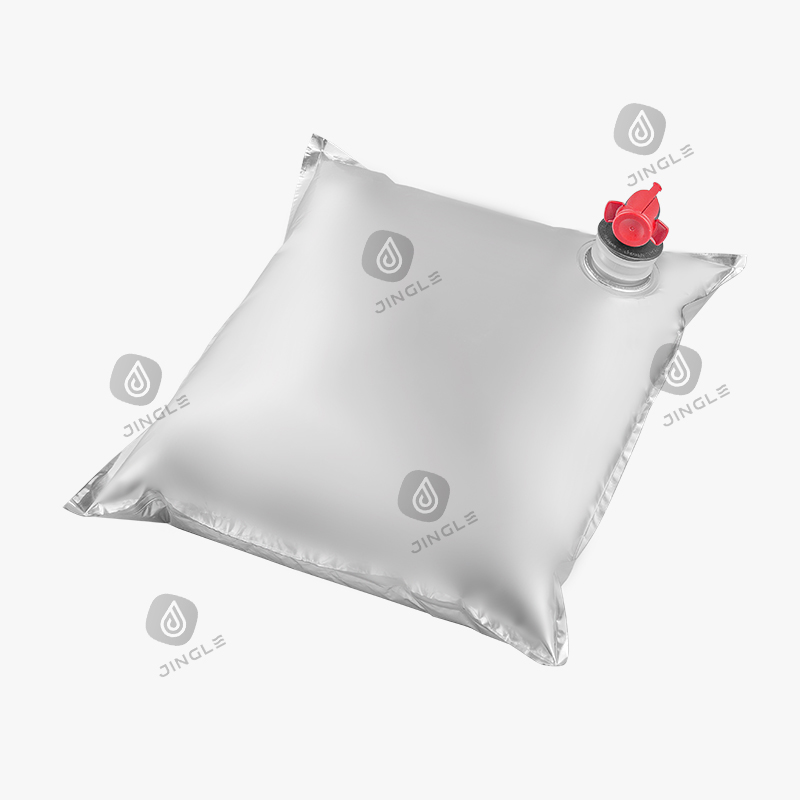
The fitment is the critical interface between the sterilized bag and the aseptic filling machine. Its design must allow for high-temperature sterilization and rapid, hermetic sealing.
For aseptic filling valve design for coffee concentrate BIB, the fitment material (typically High-Density Polyethylene or Low-Density Polyethylene) and structure must withstand sterilization protocols. This usually involves steam injection at one hundred twenty-one degrees Celsius or above, or a chemical bath (e.g., Peracetic Acid), without warping or compromising the seal surface integrity.
Two primary categories of fitment exist, each with specific aseptic capabilities:
| Fitment Type | Sterilization Method Compatibility | Filling Speed/Ease | Ideal Aseptic Application |
|---|---|---|---|
| Standard Glued Spout (Non-Aseptic) | Not Suitable for Aseptic | High | Non-sterile, shorter shelf-life products. |
| Aseptic Valve/Spout | Steam Injection (SIP) & Chemical (CIP) | Moderate-High | High-acidity concentrates (e.g., coffee, tea, fruit juices). |
Beyond the fitment, the bag material must provide a high barrier to oxygen. The low-oxygen permeation film structure for tea BIB is crucial because tea and coffee concentrates are highly sensitive to oxidation, which can quickly degrade flavor and quality. Typical structures include Metallized Polyester (MPET) or Ethylene-Vinyl Alcohol (EVOH) barrier layers, preventing oxygen ingress and extending the un-refrigerated shelf life of the concentrate.
The dispensing tap must be designed as a microbial barrier post-opening, ensuring the remaining product integrity. Furthermore, it must meet the commercial need for speed and efficiency.
The impact of BIB fitment design on commercial dispensing speed is tied directly to the tap's internal diameter, seal geometry, and the venting mechanism. A wider, smooth-bore tap minimizes shear stress on the liquid and maximizes gravitational flow, which is essential for rapid batch mixing in a commercial setting.
A secondary technical consideration is the "self-sealing" or "no-drip" feature, which ensures the closure surface remains clean and minimizes product residue that could become a point for microbial growth after initial use.
B2B procurement requires documented evidence that the packaging system maintains sterility throughout its lifecycle.
The validation protocol for aseptic BIB packaging in food service must include robust testing. This involves simulating worst-case storage and handling scenarios, followed by microbiological testing. This is often documented in the Sterility Assurance Level (SAL), typically $1$ in $1,000,000$, meaning less than one non-sterile unit per one million packages.
The B2B guide to BIB dispensing tap hygienic verification mandates testing to prove the absence of microbial ingress after the tap is opened and closed multiple times. This includes:
Suzhou Jingle Packaging Technology Co., Ltd. is equipped with advanced production lines that can produce a variety of flexible packaging products according to customer requirements, satisfying diverse market demands. We not only sell self-produced packaging products, including specialized Tea & Coffee Liquid Bag-In-Box (BIB) Packaging, but also provide supporting filling equipment and corresponding after-sales services.
Our comprehensive approach ensures that B2B customers receive a complete, validated system, from the custom low-oxygen permeation film structure for tea BIB to the specification of the aseptic filling valve design for coffee concentrate BIB, ensuring seamless integration into their production facilities and compliance with global food safety standards.
Optimizing Tea & Coffee Liquid Bag-In-Box (BIB) Packaging for aseptic concentrates is a detailed engineering process. Success hinges on a fitment compatible with robust sterilization, a high-barrier film structure, and a dispensing tap that balances flow rate (addressing the impact of BIB fitment design on commercial dispensing speed) with absolute post-opening microbial integrity (verified by the B2B guide to BIB dispensing tap hygienic verification). Suzhou Jingle Packaging is ready to work closely with customers to actively explore new market opportunities, providing solutions based on unparalleled industry experience.
Tea and coffee concentrates are highly susceptible to oxidation, which causes rapid degradation of flavor, aroma, and color. A low-oxygen permeation film structure for tea BIB, typically incorporating Ethylene-Vinyl Alcohol or Metallized Polyester layers, minimizes oxygen ingress, thus preserving the product's quality and achieving the long, ambient shelf life required by the aseptic process.
An aseptic BIB fitment (or valve) is designed with internal geometry and material capable of withstanding steam or chemical sterilization in line with the aseptic filling valve design for coffee concentrate BIB. It features a tamper-evident, hermetic seal that is only broken within the sterile chamber of the filler, whereas a non-aseptic fitment does not guarantee pre-sterility.
Hygienic safety is validated through a validation protocol for aseptic BIB packaging in food service that includes microbial challenge tests. This test confirms that the tap's closure mechanism prevents microbial ingress even after repeated opening and closing cycles, as detailed in the B2B guide to BIB dispensing tap hygienic verification.
The impact of BIB fitment design on commercial dispensing speed is primarily governed by the diameter and smooth-bore nature of the dispensing channel. A wider, less restrictive channel allows for a faster flow rate, which is crucial for maximizing efficiency when mixing large batches of tea or coffee concentrate.
The SAL is the probability that a product unit is non-sterile after sterilization, often required to be one chance in a million. For B2B procurement of Tea & Coffee Liquid Bag-In-Box (BIB) Packaging, the SAL confirms that the manufacturer's entire system (bag, fitment, and filling process) meets the highest standards for product safety and extended ambient shelf life.
Address
No. 758 Longqiao Road, Wujiang Economic Development Zone, Suzhou, Jiangsu, China, 215200
cs3@suzhoujingle.com ( Ellie Li )
sales-sea@suzhoujingle.com ( Alex Too )
billhe@suzhoujingle.com ( Bill He )
kennyyan@suzhoujingle.com ( Kenny Yan )
Phone
+86-51263068181
Fax
+86-51263068282

Suzhou Jingle Packaging Technology Co., Ltd. mainly develops and produces Aseptic BIB Packaging/Bag Products for food, beverage, and non-food fields, supporting the filling equipment, selling self-produced packaging products, and providing corresponding after-sales services.
Keep in touch

 English
 中文简体
中文简体
 русский
 Español