Article Directory
In the global liquid food industry, maintaining product integrity and extending shelf life without refrigeration are paramount. Aseptic processing is the gold standard for achieving these goals, particularly for sensitive products like dairy and fruit juices. High-performance bag in box packaging equipment is the critical link in this chain, providing a sterile interface between the processed liquid and the flexible container. Suzhou Jingle Packaging Technology Co., Ltd., located in the WuJiang Economic Development Zone, leverages over 15 years of industry experience to provide comprehensive solutions in this field, specializing in both the liquid flexible packaging and the sophisticated filling machinery required for global distribution.
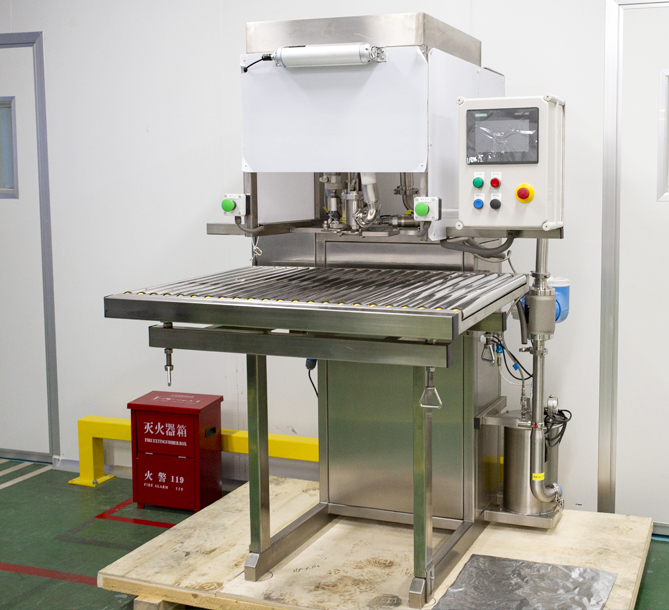
The core of aseptic technology lies in the filling head. One might ask, how to sterilize bag in box filling valves effectively? Modern bag in box packaging equipment utilizes a closed-loop steam sterilization system (SIP - Sterilization in Place). Before the filling cycle begins, the filling chamber and valve components are treated with high-pressure saturated steam to eliminate microbial contaminants. This process ensures that the product contact surfaces are surgically clean.
While standard filling machines rely on chemical sanitizers, aseptic-grade equipment uses thermal sterilization to provide a deeper, more reliable kill rate for spores and bacteria. This distinction is vital for products with low acidity, such as dairy.
| Feature | Aseptic Filling Equipment | Standard Clean-Fill Equipment |
| Sterilization Medium | Saturated Steam or Hydrogen Peroxide (H2O2) | Peracetic acid or chemical rinses |
| Microbial Kill Rate | Log 6 reduction (Aseptic level) | Log 3-4 reduction (Extended shelf life) |
| Valve Design | Fully enclosed, bellows-sealed valves | Open-air or partially shielded valves |
To prevent re-contamination during the brief moment when the bag fitment is opened, bag in box packaging equipment creates a local sterile zone. This is achieved by integrating HEPA filters into bag in box filling machines. High-efficiency particulate air (HEPA) filters provide a constant flow of sterile air over the filling head, creating positive pressure that prevents ambient, non-sterile air from entering the critical filling zone.
This "clean air box" approach is significantly more efficient than room-wide sterilization, as it focuses resources directly on the filling point. Suzhou Jingle Packaging Technology Co., Ltd. designs its systems to ensure that the laminar flow remains laminar even during high-speed operations, preventing turbulence that could draw in contaminants.
| System Component | Modern HEPA Integrated System | Traditional Clean Room Setup |
| Environmental Control | Localized positive pressure (Class 100) | General facility filtration (Class 10,000) |
| Contamination Risk | Minimal (Isolated filling zone) | Higher (Human interference risk) |
| Energy Efficiency | High (Localized air treatment) | Low (Requires cooling/filtering entire rooms) |
For dairy and beverage producers, why is oxygen barrier important in bag in box packaging? It is not enough to fill the product aseptically; the container must also prevent oxygen ingress over time. Modern equipment handles specialized multi-layer bags (often containing EVOH or metallized polyester) and subjects the fitment (tap/spout) to a localized sterilization treatment—usually a concentrated spray of H2O2—just seconds before the filling needle pierces the membrane.
Suzhou Jingle Packaging Technology Co., Ltd. produces a variety of liquid flexible packaging products according to customer requirements, ensuring that the material science of the bag complements the technical capabilities of the bag in box packaging equipment. This synergy is what allows for shelf-stable dairy products to last up to 12 months without preservatives.
Consistency is key in high-volume production. A frequent technical query is: what is the filling accuracy of bag in box machines? Aseptic bag in box packaging equipment utilizes flow meters (electromagnetic or mass flow) to achieve accuracy levels within ±0.2% to 0.5%. Furthermore, how to reduce foaming in bag in box dairy filling is solved through bottom-up filling and controlled flow rates, which prevent oxygen entrainment and maintain the aseptic seal's integrity by keeping the sealing area free of product residue.
While specific aseptic machines are dedicated to sterile products, many modern lines are modular. However, it is standard practice to use a dedicated aseptic machine for dairy to prevent cross-contamination risks.
Flexible bags for aseptic use are usually pre-sterilized using Gamma irradiation. They arrive at the filling site in a sealed, sterile state, and the bag in box packaging equipment only sterilizes the exterior of the fitment before opening.
Speed varies by bag size (e.g., 3L to 25L). Modern automated lines can often process 300 to 600 bags per hour per filling head, depending on the viscosity of the liquid and the bag size.
Yes. Suzhou Jingle Packaging Technology Co., Ltd. provides comprehensive after-sales services, including technical support and spare parts, leveraging our team's 15+ years of industry experience.
Filled aseptic products can generally be stored at ambient temperatures (20-25°C) as long as the box remains intact and the oxygen barrier is not compromised. Once opened, they must be refrigerated.
Address
No. 758 Longqiao Road, Wujiang Economic Development Zone, Suzhou, Jiangsu, China, 215200
cs3@suzhoujingle.com ( Ellie Li )
sales-sea@suzhoujingle.com ( Alex Too )
billhe@suzhoujingle.com ( Bill He )
kennyyan@suzhoujingle.com ( Kenny Yan )
Phone
+86-51263068181
Fax
+86-51263068282

Suzhou Jingle Packaging Technology Co., Ltd. mainly develops and produces Aseptic BIB Packaging/Bag Products for food, beverage, and non-food fields, supporting the filling equipment, selling self-produced packaging products, and providing corresponding after-sales services.
Keep in touch

 English
 中文简体
中文简体
 русский
 Español